Wondering what russian breakfast foods actually look like? You’ll find porridge, cheese pancakes, blini and open sandwiches, washed down with tea. Most mornings are simple and filling, with fancier dishes saved for weekends.
Breakfast is one small window into russian food culture, and this guide walks through the morning table dish by dish.
| Item | Key fact |
|---|---|
| Zavtrak (breakfast) | Usually a substantial meal, though the biggest meal comes in the afternoon |
| Kasha | Porridge made from buckwheat, semolina or millet |
| Syrniki | Fried cakes made from tvorog, a farmers cheese |
| Blini | Crepes with sweet or savory toppings |
| Raf coffee | The most popular coffee drink in the 1990s |
These facts come from Tasting Table and SBS Food; food habits change, so check the sources before you rely on them.
What does a Russian breakfast look like?
Breakfast, known as zavtrak, is usually a substantial meal in Russia, even though the largest meal of the day falls in the afternoon, as Tasting Table explains. The choices run from porridge to pancakes to plain sandwiches.
Where you eat matters. Villagers tend to keep to tradition and often finish last night’s dinner, while city dwellers have been drifting toward a European-style morning meal of porridge, cereal, coffee and pastries, according to Cooking the Globe.
The classic lineup includes:
- Kasha, a grain porridge
- Syrniki, cheese pancakes
- Blini, thin crepes
- Buterbrody, open sandwiches
- Tea, often with something sweet
In the Soviet period, rich porridges, tvorog cheesecake and eggs with fried doktorskaya sausage were cooked at home and served in cafes and school cafeterias, per Google Arts & Culture. Today many of the more elaborate dishes are weekend food, because busy weekday mornings leave little time for cooking, as Cooking the Globe notes.
Kasha: the porridge at the heart of breakfast
Kasha is among the most basic and filling breakfasts in Russia. It can be made from buckwheat, semolina or millet and topped with milk, honey or fruit, says Tasting Table. Because it is so filling and quick to make, farmers and land workers have valued it for centuries.
Buckwheat and wheat are the favorites, though barley, oats, millet and rye also turn up, according to Cooking the Globe. Rice can be cooked the same way.
For children, sweetness was the rule. Google Arts & Culture describes cream of wheat porridge with jam as the easiest sweet breakfast to make in Soviet kitchens.
Pancakes: syrniki, blini and their relatives
Syrniki are Russia’s hotcakes, made from tvorog, a farmers cheese that SBS Food likens to cottage cheese. They run smaller than ordinary pancakes but fluffier in the middle, as Tasting Table points out.
Typical toppings are sour cream, marmalade, jam, honey or apple sauce, according to Gambero Rosso. The same source says the dish began as a breakfast of the poorest peasant families, who relied on their own dairy, before it spread to the highest social classes.
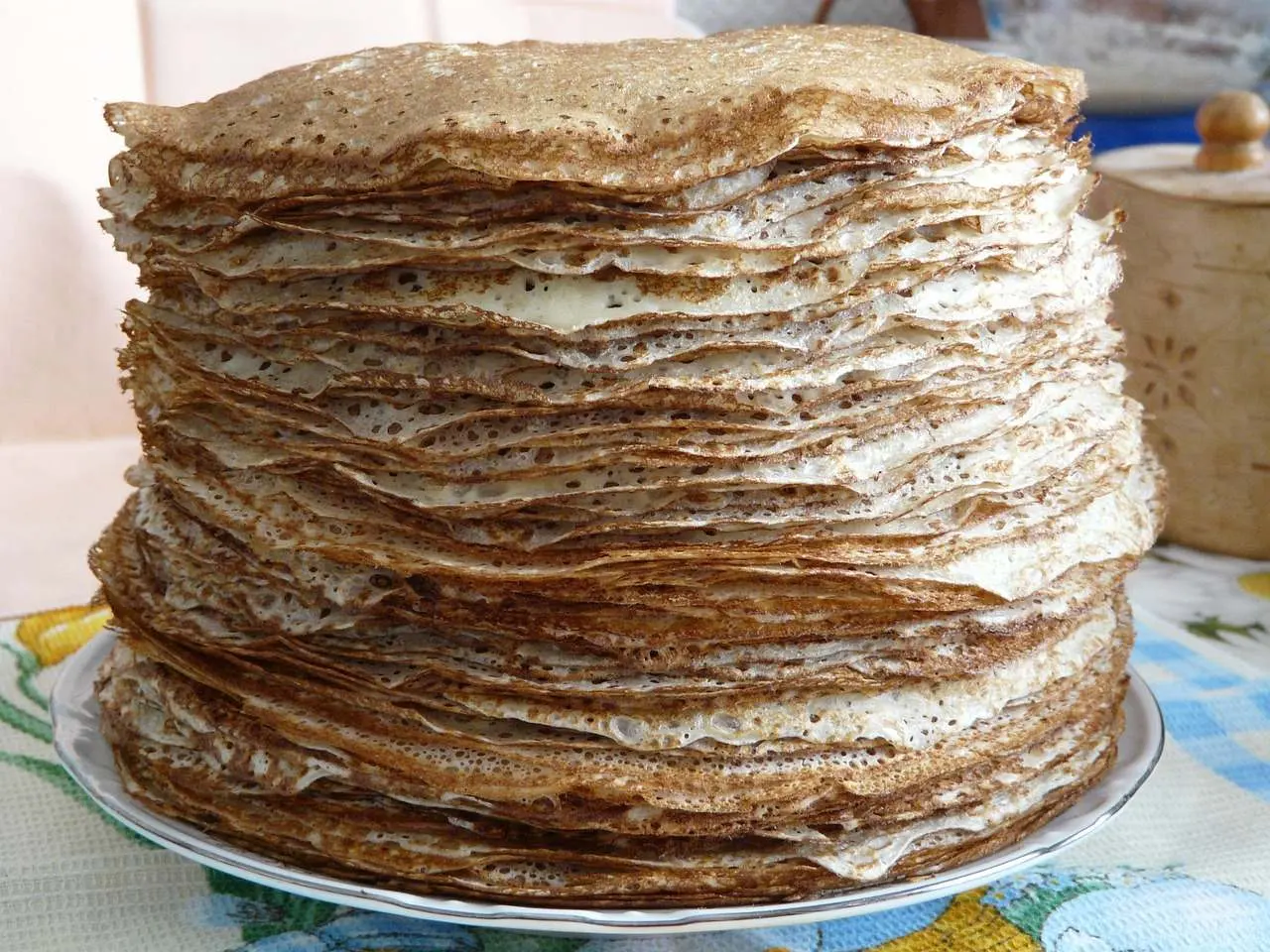
Blini are the Russian crepe. They can be topped with fruit, jam or honey for a sweet start, or filled with meat, cabbage or cottage cheese and finished with sour cream, a habit Tasting Table links to the old frugal practice of reusing leftovers.

Blini carry some ritual weight too. SBS Food notes that pancakes are eaten year-round but become mandatory during Maslenitsa, the traditional holiday that marks the end of winter.
Soviet kitchens also relied on oladyi and blinchiki, batter cakes raised with baking powder that were the standard breakfast at home and in food service, per Google Arts & Culture. Tvorog shows up in other sweets too, such as ponchiki, powdered-sugar donut holes, and zapekanka, a breakfast cake with raisins.
Savory blini often get caviar and sour cream, but this is no daily habit. Cooking the Globe says red caviar is considered a delicacy that costs a lot, so smoked salmon or other fish is the cheaper topping.
Sandwiches, sausage and eggs
Buterbrody are open-faced sandwiches: a slice of black bread, a layer of butter, then sausage and cheese, as described by Cooking the Globe. Bread has a place at every meal of the day, and Gambero Rosso singles out breakfast as a main moment for it.
The sandwich was also the fastest morning meal in Soviet times, made with butter and Russian cheese or sausage, and it doubled as the most popular take-away food, according to Google Arts & Culture.
Tastes are shifting in cities, where more people avoid sausage first thing in the morning. Small provincial towns and villages, by contrast, still love their buterbrody, says Cooking the Globe.
If you enjoy bread topped with savory bites, the cold-table tradition of zakuski is worth a read next.
Tea, coffee and sweet extras
Tea is the classic morning drink. Cooking the Globe calls tea culture huge in Russia and pairs it with cookies as a breakfast dessert, while Tasting Table describes a spiced version with black tea, cinnamon sticks, cloves and a mix of pineapple, orange and lemon juices.
Coffee is the newcomer. It was once reserved for the royal and rich, and Raf coffee, a steamed mix of espresso, vanilla sugar and cream, became the country’s most popular coffee drink in the 1990s, according to Tasting Table.
Sweet extras matter as well. Google Arts & Culture calls condensed milk a much-loved addition to porridges, syrniki and grenki.
How to build a Russian breakfast at home
You don’t need a long shopping list. Work through these steps:
- Make at least one kind of pancake, either syrniki or blini, since the meal feels incomplete without them.
- Add a pot of buckwheat or semolina kasha.
- Stir fresh tvorog or cottage cheese with berries or fruit for a quick, light plate.
- Lay out black bread, butter, sausage and cheese for buterbrody.
- Brew a strong pot of tea and finish with jam or condensed milk.
That advice follows Cooking the Globe, which says a Russian breakfast needs pancakes. Once the morning table is covered, the guide to traditional russian food picks up with the heartier dishes of lunch and dinner.
Frequently asked questions
What is breakfast called in Russian?
Show answer
The word is zavtrak. It is generally hearty, yet the afternoon meal is still the bigger one.
Do Russians drink tea or coffee with breakfast?
Show answer
Tea has the longer history. Coffee spent years as a luxury for the wealthy before it spread, and a creamy espresso drink called Raf took over in the 1990s, per Tasting Table.
What is the difference between blini and syrniki?
Show answer
Blini are thin crepes that suit sweet or savory toppings. Syrniki are small fried cakes built on tvorog, which gives them a soft, fluffy center.
Do Russians really eat caviar for breakfast every day?
Show answer
No, that is a stereotype. People like caviar, but the price keeps it for special tables, and smoked fish is the budget swap.