Wondering what belongs on a Russian Easter table? Kulich and paskha are the pair: a tall, sweet yeast bread and a molded sweet curd-cheese dessert, blessed at church and eaten together after Lent.
This guide is part of our look at russian food culture.
| Item | Value |
|---|---|
| Kulich season | Easter to Pentecost |
| Moscow kulich sales forecast (2015) | More than 800 tons |
| Kulich varieties on sale in Moscow (2015) | More than 20 types |
| Kulich size range in Moscow (2015) | 100 grams to 1 kilogram |
| Home-baking time for kulich | 45-60 minutes |
| Chilling time for a paskha mould | Twelve hours |
Figures come from The Moscow Times and Wikipedia’s paskha entry. They can change, so check the source before you rely on them.
Two foods, one Easter table
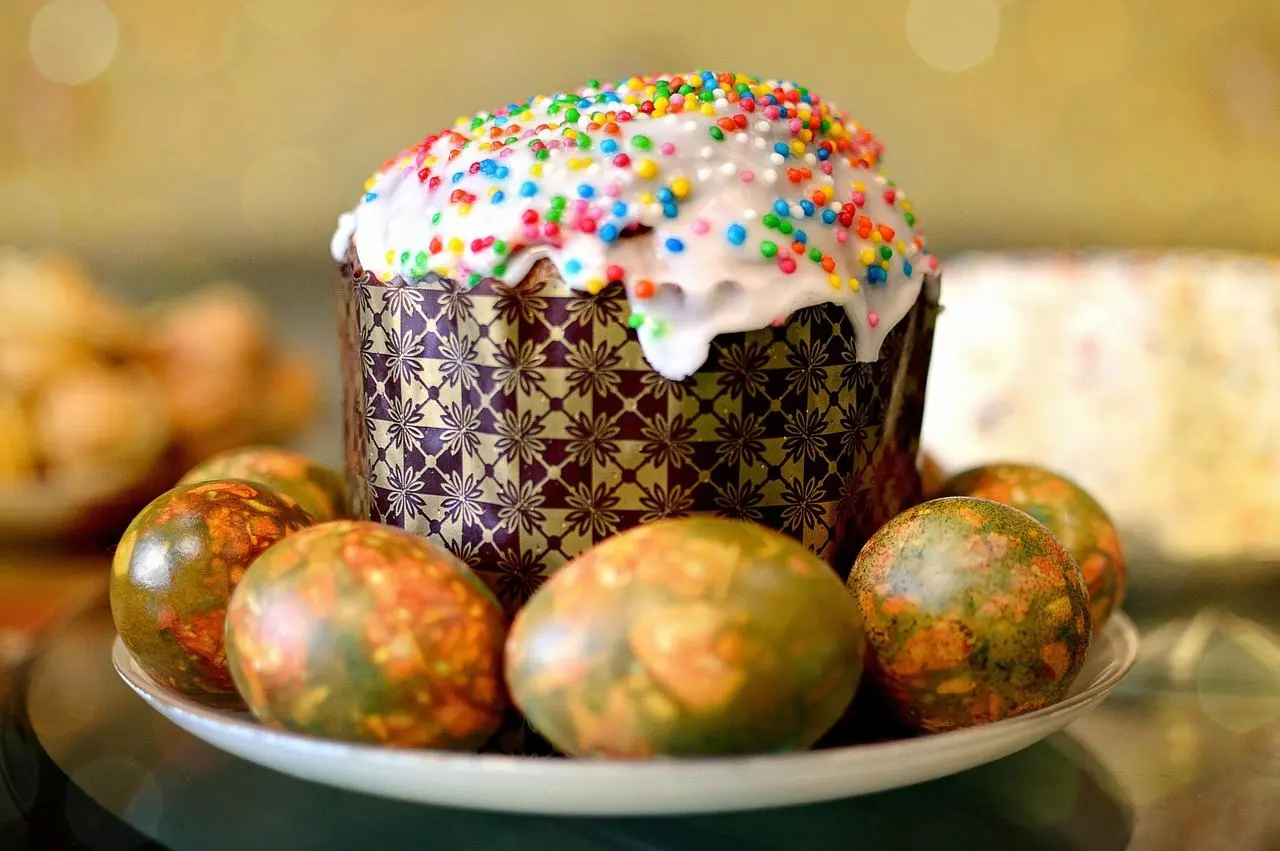
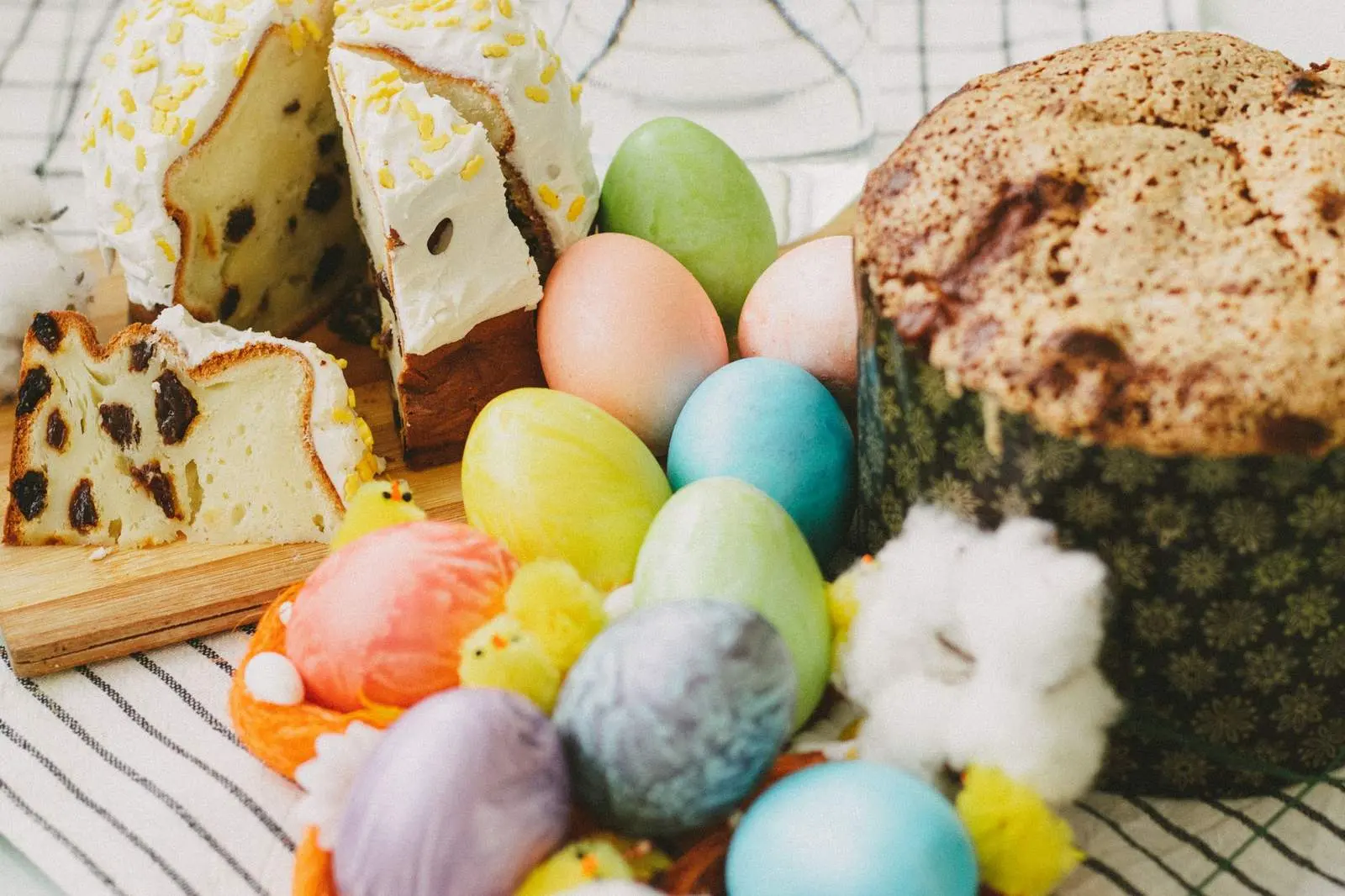
Kulich is the Russian name for Easter bread. For the eastern Slavs, festive bread is round and tall, with dough decorations on top, as Wikipedia’s kulich entry describes it.
Paskha is the other half of the pair. It is made during Holy Week and brought to church on Great Saturday to be blessed after the Paschal Vigil, according to Wikipedia’s paskha entry.
The setting is the end of a long fast: the spiritual preparation begins with 40 days of abstaining from meat, eggs and dairy, as SBS Food reports. That is why the Easter bread and cheese are so rich and are made from many of the dairy items given up during Lent.
The habit outlasted official atheism. HSE University notes that during Soviet times religious traditions were outlawed, yet the food traditions continued, even in atheist households.
To see how Russians eat before the fast begins, read our guide to maslenitsa food.
Kulich: the tall, iced Easter bread
Traditionally the loaf is baked in tall, cylindrical tins, much like coffee or fruit juice tins, per Wikipedia. Bakers today often reach for paper panettone cases instead, as the Real Bread Campaign notes.
The crumb is brioche-style and studded with raisins and sometimes candied citrus. The Moscow Times adds candied fruits, almonds, saffron and cardamom to the picture, and calls the result a semi-sweet bread. Wikipedia compares the recipe to Italian panettone, but denser.
When the loaf has cooled, it gets a white icing that drizzles slightly down the sides, plus colorful flowers. The letters ХВ often adorn it and stand for Христос воскрес, “Christ is Risen”.
Why the cylinder?
The origin of the shape is a matter of debate, and three explanations come up most often:
- It represents the dome of an Orthodox church.
- It is shaped like a priest’s hat.
- It descends from a pagan spring loaf, baked as a sacrifice for a good harvest and symbolising fruitfulness and fertility.
The first and third ideas appear in the Real Bread Campaign article, the second in The Moscow Times. None of them is settled fact.
Paskha: the molded curd dessert
Paskha is an airy, cheesecake-like mixture made from tvorog, which the Real Bread Campaign likens to Italian ricotta, plus eggs and sugar. Wikipedia lists butter, smetana (sour cream), raisins, almonds, vanilla, spices and candied fruits among the add-ins.
It is formed in a mould, traditionally a truncated pyramid. According to Wikipedia, that shape recalls the first Passover in Egypt and the Last Supper as a Passover Seder.
How paskha is made
The steps below follow Wikipedia’s description of the traditional method:
- Press the tvorog to remove as much liquid as possible, then push it through a sieve twice.
- For a cooked paskha, heat the mass and cool it gradually in cold water.
- Set the mixture in a mould, traditionally a wooden pasochnitsa, with cheesecloth protecting it.
- Chill it for twelve hours somewhere cold but not freezing, such as a cellar or refrigerator.
- Turn it out, remove the cheesecloth and decorate with candied fruits, nuts or flowers.
A cooked paskha is built on an egg custard, while an uncooked one is simply raw curd mixed with the other ingredients. Raw curd keeps poorly, so those versions are typically made smaller.
Blessing, baskets and the Easter meal
After the Easter service, the kulich is placed in a basket, decorated with colorful flowers and blessed by the priest. The service itself runs from just before midnight on Holy Saturday into the early hours of Sunday, as The Moscow Times describes it.
The Real Bread Campaign says the basket always holds at least one kulich, and lists what else goes in:
- Decorated hardboiled eggs
- Paskha
- Meat
- Wine
Blessed kulich is eaten before breakfast each day, while any unblessed leftovers go to the table with paskha as dessert. On the day itself, HSE University describes the most traditional egg dye as onion peels, and a game in which you beat your egg against someone else’s before eating it.
Both desserts also sit among savory dishes at larger gatherings; our guide to zakuski covers that side of Russian hosting.
The bread is also big business. In an April 2015 article, a Moscow trade official expected more than 800 tons of kulich to be sold in the city over the holidays, in more than 20 types ranging from 100 grams to 1 kilogram, according to The Moscow Times. The same article says kulich replaces ordinary bread in some households and in all the bakeries in Moscow for the duration of Holy Week.
Does paskha mean bread or cheese?
Both, depending on where you are. The Real Bread Campaign calls this confusing: the word paskha is used for both the bread and the curd dessert.
In the south of Russia and Ukraine both are called paskha, with the cheese version set apart by the word syrna. Elsewhere, kulich is the bread and paskha is the cheese.
The wider tradition stretches well beyond Russia. Wikipedia lists Belarus, Ukraine, Romania, Armenia, Georgia, Moldova, North Macedonia and Serbia as places where this kind of Easter bread is eaten.
Baking kulich at home
The Moscow Times offers a home recipe and a warning: many kulich are too dry by the time they are eaten. Its fix is simple.
- Use lots of butter and knead the dough really well.
- For the classic height, bake in clean coffee tins or tomato cans.
- Line the molds with parchment paper on the bottom and up the sides so the loaves come out.
- Bake for 45-60 minutes, until a wooden skewer in the middle comes out clean.
For the icing, the same recipe mixes egg white, powdered sugar and lemon juice until reasonably thick yet spreadable. Wait until the cakes are completely cool before spreading it on.
Frequently asked questions
When do people eat kulich?
Show answer
The season runs from Easter until Pentecost. The blessed loaf comes first thing in the morning, before anything else is eaten.
Is paskha cooked or raw?
Show answer
Either works. Cooked versions rest on an egg custard base, and raw versions skip the heat entirely, which is why they are usually smaller.
What do the letters ХВ mean?
Show answer
They abbreviate the Easter greeting Христос воскрес, meaning “Christ is Risen”. You will see them on iced kulich and on paskha moulds.
Can I use a coffee tin to bake kulich?
Show answer
Yes, a clean coffee tin gives the traditional tall shape. Just line it with parchment paper first so the loaf slides out intact.