Not sure what to put on the table for Pancake Week? Maslenitsa food is built around blini, thin buttery pancakes you pile with sour cream, caviar or jam before Lent begins.
This guide sits within our wider look at russian food culture, and it focuses on what people actually eat during the festival.
| Item | Value |
|---|---|
| Length of the Lenten fast that follows | 40-day period |
| Year Russia adopted Christianity | 988 |
| Moscow festival crowd, 2018 | Over 4.75 million people |
| Moscow events planned, 2013 | More than 500 events |
| Day mothers-in-law traditionally host sons-in-law | Wednesday |
These figures come from National Geographic and The Moscow Times. They can change, so check the sources before you rely on them.
Why are blini the heart of Maslenitsa food?
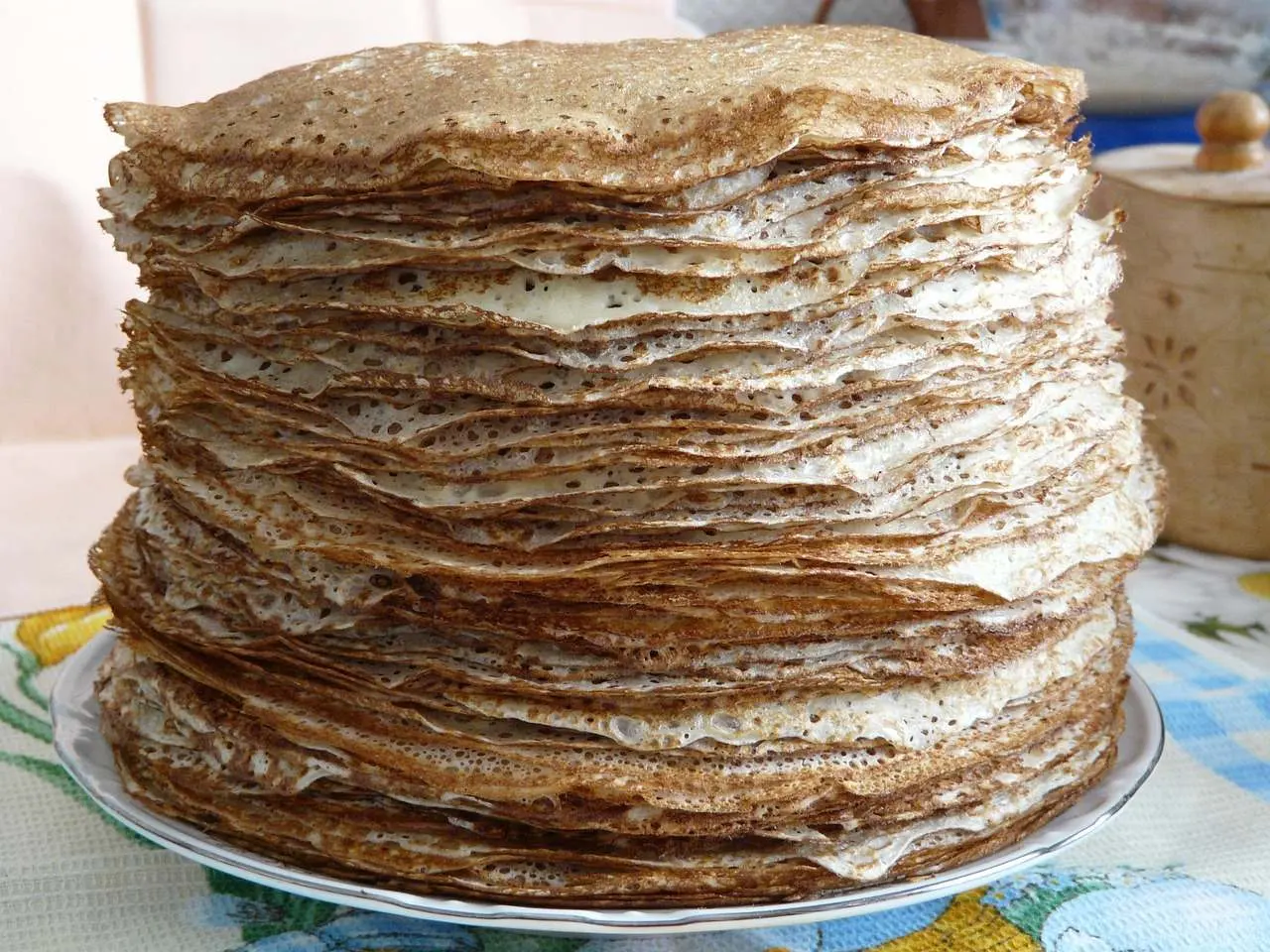
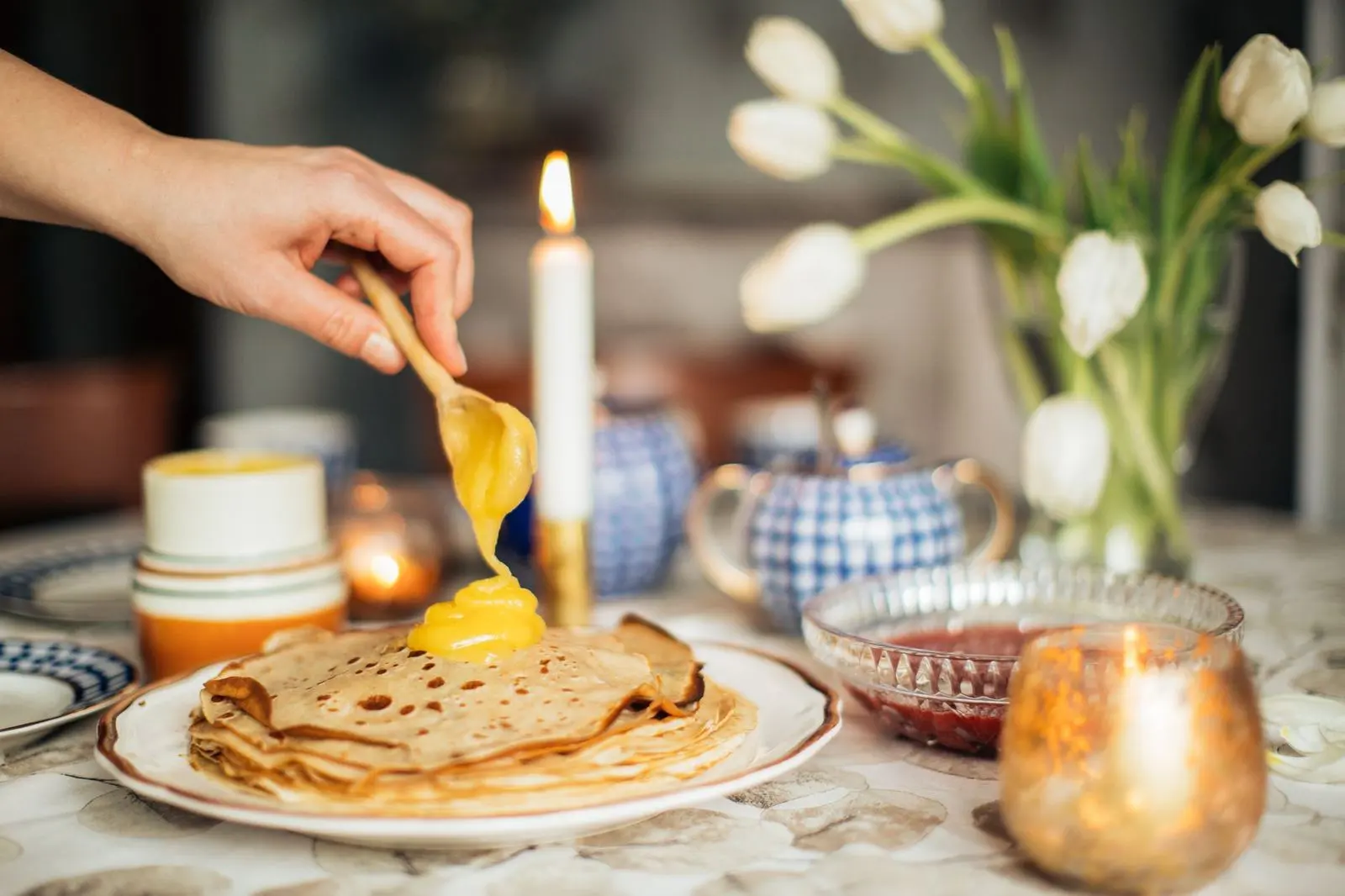
A blin (plural blini) is closer to a crepe than a fat American pancake. ABC News describes it as cooked on a round griddle, spread thin and folded over its filling several times.
The round, golden shape is the whole point. NPR explains that the roundness and warmth of blini were meant to stand for the sun. Scholar Darra Goldstein told National Geographic that early Slavs baked round pancakes on hot stones to welcome the sun back after winter.
That sun worship is older than the church. Per the same National Geographic report, pagan Slavs honored the sun before Russia adopted Christianity in 988. The Orthodox Church later let the blin become the premier symbol of indulgence just ahead of the Lenten fast.
The festival’s other name comes from the same food. ABC News notes that Butter Week took its name from the butter used to cook the blini.
Pancakes also reach beyond the festival itself. According to The Moscow Times, they are present throughout life and are even eaten at funerals to symbolize eternal life.
What do people put on blini?
Toppings are the fun part, and the range is wide. NPR’s Moscow report describes cooks turning out stacks of blini slathered with sour cream and caviar or stuffed with chocolate, jam or cheese.
A typical spread mixes savory and sweet:
- Sour cream and caviar, the classic pairing seen at street stalls.
- Berries or jam for something sweet.
- Mushrooms, folded in or served alongside.
- Salmon or herring with dill, lemon and sour cream.
- Spinach and cheese, or jam and sweet tvorog (a curd cheese).
The last three ideas come from a Moscow Times party menu, whose author says a Maslenitsa gathering needs only piles of hot, buttery pancakes and a range of sweet and savory fillings.
The dough matters too. National Geographic calls the blin a dense, yeasty buckwheat pancake, and the Moscow Times recipe says buckwheat flour gives a nutty taste and brown color while buttermilk lightens the batter.
Not everyone makes the same thing. Wikipedia says Russians bake blini and flatbread, while Belarusians and Ukrainians cook pierogi and syrniki.
Butter, dairy and the rules before Lent
The feasting has a practical logic. National Geographic explains that dairy such as butter is traditionally forbidden during Lent, which is a 40-day period of fasting before Easter, so this week is the last chance to enjoy it.
The blin even helps with housekeeping. ABC News calls it a convenient way to clear the cupboards of dairy, meat and fish that Lent forbids.
The week has its own limits, though. A Moscow Times guide reminds readers that fish and dairy are allowed on Maslenitsa while meat is already off limits.
The last day of the week is also called Cheesefare Sunday. Wikipedia says that is because devout Orthodox Christians may eat dairy on that day for the final time until Easter.
When the fast ends, the baking changes character completely, as you can see in our piece on kulich and paskha.
A day-by-day look at the Maslenitsa table
Each day of the week has its own custom. The Moscow Times and Wikipedia outline the pattern, though practice varies by region.
- Monday: the welcome. A straw effigy of winter is built and paraded, and the first pancakes may be offered to the poor.
- Tuesday: masquerades, mummers’ plays and a day for young lovers to court.
- Wednesday: mothers-in-law invite their sons-in-law over for blini.
- Thursday: outdoor fun such as sledding, snowball fights, snow fort battles and, in some places, fistfights.
- Friday: the sons-in-law return the favor with an invitation of their own.
- Saturday: daughters-in-law welcome everyone to a feast.
- Sunday: the day of forgiveness, when the effigy is burned and any leftover pancakes may follow it into the fire.
Goldstein sums up the logic for National Geographic: every day was set aside for a different way of sharing pancakes, which strengthened family ties.
If a relative or friend invites you for pancakes, our guide to russian table etiquette covers how to behave as a guest.
How is Maslenitsa eaten today?
The festival went quiet in public for a while. NPR reports that Soviet-era celebrations were more muted and usually took place at home.
The public side has come back in a big way. National Geographic says that in 2018 over 4.75 million people gathered in Moscow for hundreds of events, massive pancake fairs and concerts.
In 2013, The Moscow Times counted more than 500 events planned for the capital. One pedestrian street became “Gluttony Row” for sampling blini, and Gorky Park offered blini-tasting lines, contests and concerts.
Contests are part of the fun. NPR heard of competitions in many blini categories and even an attempt at the record for the tallest stack of pancakes.
Goldstein adds a gentle reality check: modern Maslenitsa is less ritual and more about eating blini at home or as street food.
Tips for a home pancake party
You do not need a Moscow park to get the spirit. The Moscow Times party guide suggests a few habits that make hosting easier:
- Mix the batter ahead of time. It benefits from resting, even overnight.
- Start your skillets before guests arrive so a warm stack is waiting in the oven.
- Offer both sweet and savory fillings so everyone finds something.
- Try buckwheat flour for flavor and buttermilk for a lighter batter.
The same writer quotes the cookbook author Elena Molokhovets, who wrote that during Maslenitsa pancakes are as necessary to Russians as donuts are to Catholics.
Frequently asked questions
When is Maslenitsa?
Show answer
There is no fixed calendar date. According to Wikipedia, it moves each year with Easter and falls in the last week before Great Lent, which begins on a Monday in the Orthodox calendar.
Is Maslenitsa only celebrated in Russia?
Show answer
No. National Geographic notes that it is often marked in Ukraine and Belarus too, although a historian told NPR that nowhere does it happen more elaborately than in Russia.
Do you have to eat blini all week?
Show answer
It is a custom rather than a rule, but the custom leans heavily that way. One American University historian quoted by NPR says you eat them as often as possible.
Why is the first pancake said to be bad?
Show answer
A Russian proverb quoted by The Moscow Times says the first pancake is always a dud. Treat it as a warm-up for the pan, and keep going.