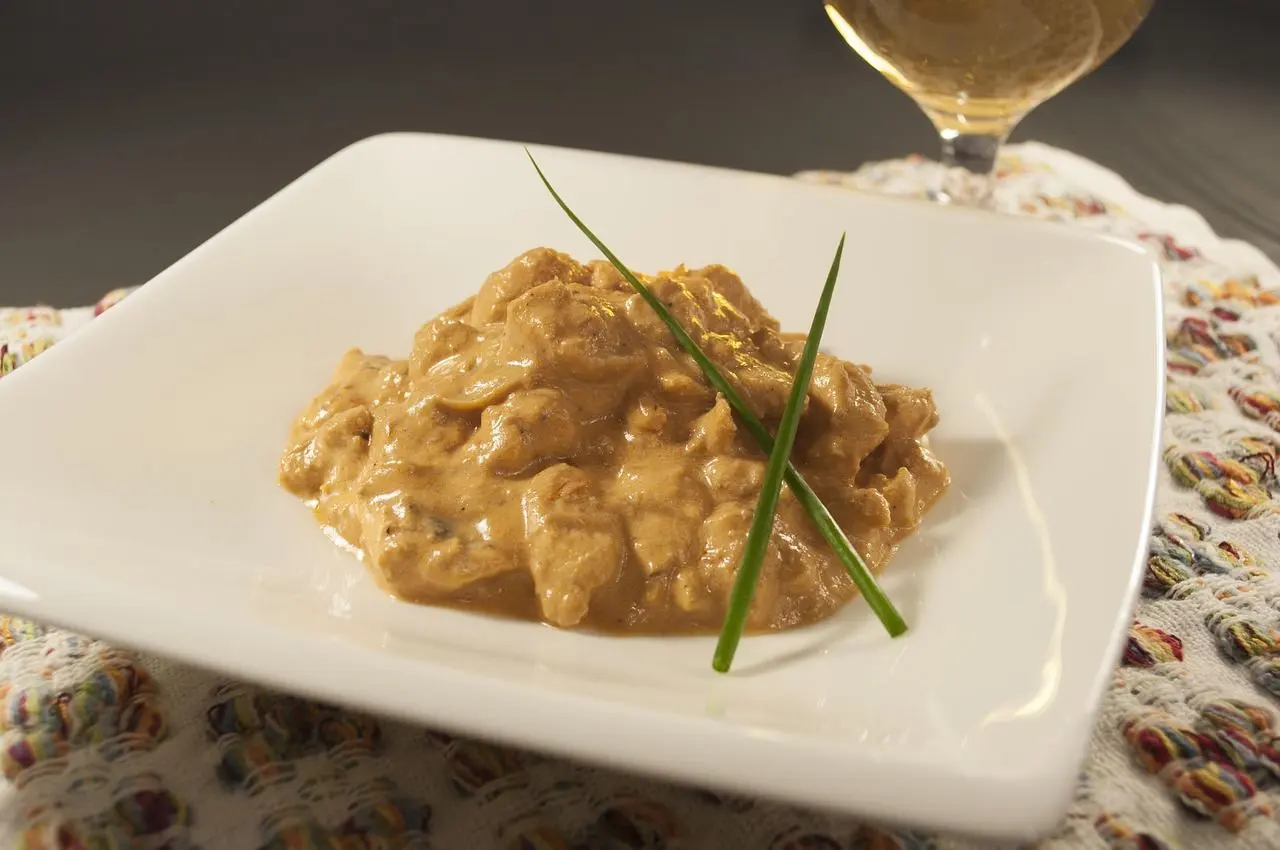
Craving a beef stroganoff recipe that tastes properly Russian? Sear thin strips of tender beef quickly, then finish them in a mustard and sour cream sauce. Serve with crisp potato straws.
If this dish appeals to you, the russian recipes collection holds more home-style classics.
| Item | Value |
|---|---|
| Earliest verifiable published recipe using the name “Stroganoff” | 1871 (cookbook) |
| Charles Brière’s competition entry | 1891 |
| First appearance in English | 1932 (Ambrose Heath’s Good Food) |
| Potato straws become the usual side | Around 1912 |
| Sour cream in the first printed recipe | 2 tablespoons |
The dates come from The Takeout and CooksInfo. Food history gets revised as researchers find older cookbooks, so check the sources before you rely on the figures.
What makes a stroganoff properly Russian?
CooksInfo defines beef Stroganoff as thin slices of cooked beef and sliced mushrooms, sautéed in butter and then mixed into a sour cream sauce. Mustard has been part of the sauce since the first printed recipe. Both points are covered on the CooksInfo page and in Wikipedia’s entry.
The Moscow Times writers Pavel and Olga Syutkin explain its popularity simply: it is relatively easy to prepare, needs no complex skills and has a short ingredient list. That is good news for a weeknight cook. You can read their full history of the dish.
The earliest version was plainer than the one most people know. Wikipedia describes a simple roux with prepared mustard and broth, finished with a small amount of sour cream and no onions, no mushrooms and no alcohol. Mushrooms are now common in many variants, as the same Wikipedia article notes.
Ingredients and the right cut of beef
Choose a tender cut. CooksInfo says the beef should come from a good, tender cut such as tenderloin, and that strip steak or top sirloin can stand in. See the CooksInfo entry for its notes on substitutes.
Slicing is the real skill. The Syutkins say the easiest way to get very thin “petals” is to slice a frozen piece of meat, while a good, sharp knife can do the same job on fresh sirloin with more effort. Late nineteenth-century cookbooks asked for the beef to be cut the way beets are cut for borshch, meaning julienned, as the Moscow Times history records. If you have already worked through a borscht recipe, that beet-style cut will feel familiar.
For scale, Jennifer Eremeeva’s modern version in The Moscow Times uses 1 kilogram of lean beef cut into thin 5 cm strips, with 350 grams of Baby Bella mushrooms and 300 ml of thick sour cream. A simpler base list looks like this:
- Tender beef, sliced thin
- Mushrooms and a sliced onion
- Butter and a little flour for the roux
- Beef broth
- Prepared mustard
- Thick sour cream (smetana)
- Salt and ground allspice
- Tomato paste, only if you like the later, rounder style
Step-by-step method
The method below follows the earliest printed recipe, as CooksInfo summarises it, with the mushrooms and onions that later cooks added. It moves fast, so have everything sliced before the pan gets hot. Overcooked beef turns tough, and CooksInfo warns against cooking it for too long.
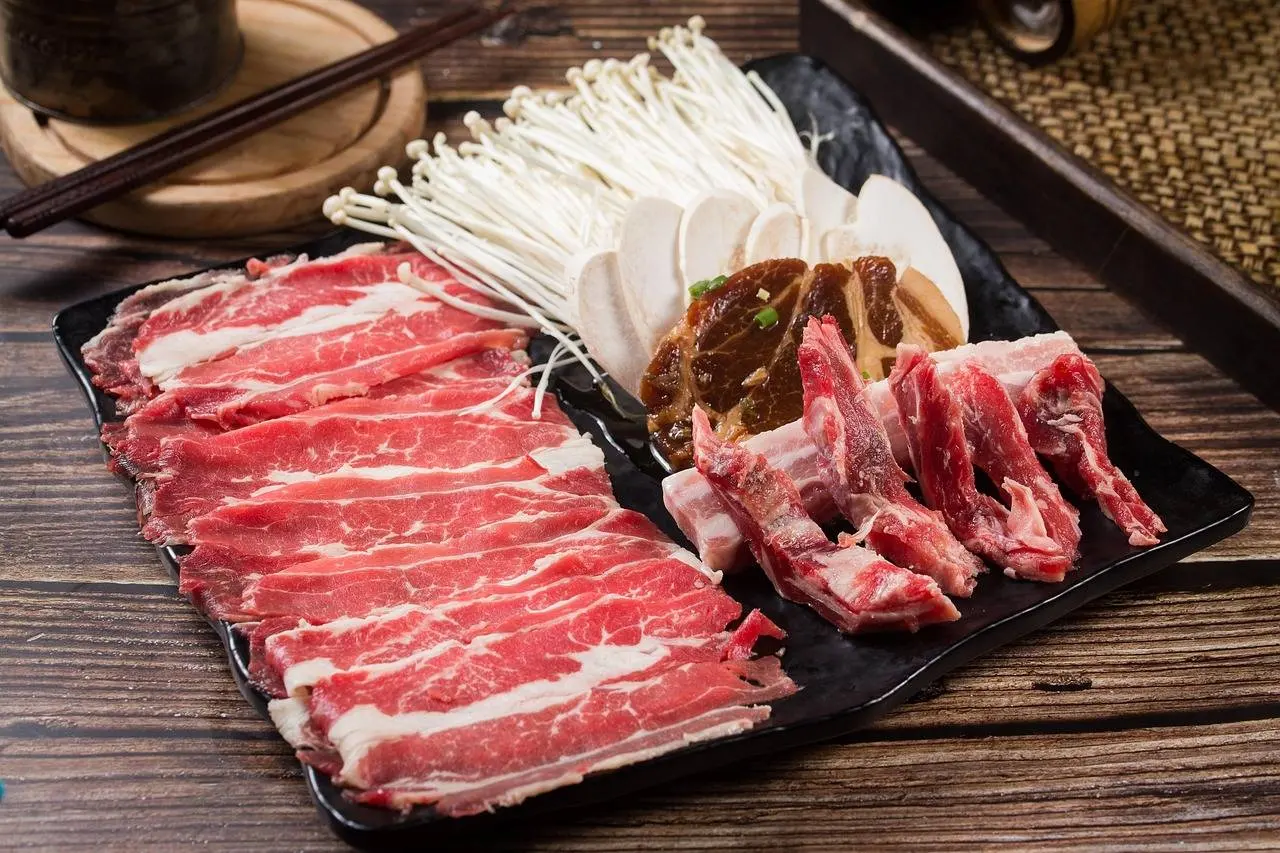
- Slice the beef thin, using the frozen-meat trick or a sharp knife, and season it with salt and ground allspice.
- Sauté the onion and mushrooms in butter until they are soft, then set them aside.
- Sauté the beef in butter just until it is cooked through. Take it out of the pan.
- Make the sauce: cook butter and flour into a roux, add broth, then stir in prepared mustard and cook until it thickens.
- Return the beef, onions and mushrooms to the sauce and reheat everything briefly.
- Stir in the sour cream last and serve straight away.
Molokhovets’s original, as CooksInfo describes it, stirred in just 2 tablespoons of sour cream at the end. Modern versions use far more, so taste as you go and add it to your liking.
What to serve alongside
In Russia, crisp potato straws are the traditional side. One recipe from 1909 already paired the dish with them, according to Wikipedia, while CooksInfo dates the habit to around 1912.
Eremeeva insists on one more thing: plenty of salty, briny pickles or cornichons on the plate. She calls them non-negotiable for the full experience, as she writes in her Moscow Times recipe. The sharp bite cuts through the rich sauce nicely.
Planning a bigger Russian meal? You could cook the pelmeni recipe on another night, rather than putting two heavy mains on one table.
Where the name comes from
The dish is named after a member of the Stroganov family, a Russian noble family. Wikipedia notes that it has been debated whether the namesake was the diplomat Pavel Stroganov or the politician Alexander Stroganov, and The Takeout adds that the theories are all confusing and none conclusive. Both are on Wikipedia and The Takeout.
One legend says the Count’s cook, travelling in the Siberian countryside, found the meat frozen so hard that only very thin strips could be cut from it. The Moscow Times history treats the tale with some caution.
On paper, the trail starts with a cookbook. The Takeout says the earliest verifiable published recipe using the name “Stroganoff” is from an 1871 cookbook, and CooksInfo identifies it as Elena Molokhovets’s A Gift to Young Housewives. Her version rubbed the sliced beef with allspice and made a mustard roux sauce. See The Takeout for the wider story.
French chef Charles Brière, then living in St. Petersburg, entered his version into a cooking competition in 1891 and was wrongly credited with inventing the dish, says The Takeout. The first English cookbook appearance seems to be in 1932, in Ambrose Heath’s Good Food, per CooksInfo.
After that, Russian migrants, refugees and exiles escaping political upheaval carried it to different parts of the world, as The Takeout puts it.
How other countries cook it
The dish travelled well and picked up local habits. Wikipedia lists a few of them:
- Brazil: estrogonofe is generally prepared with tomato paste or ketchup and mushrooms.
- Japan: it is most commonly served with white rice, or white rice seasoned with parsley and butter.
- Nordic countries: stroganoff is also popular there.
None of these is wrong, only different. If you want the Russian way, keep the mustard, the smetana and the potato straws.
Frequently asked questions
Can I use something other than beef?
Show answer
Yes. The Syutkins point to the dish’s flexibility: rump roast can replace tenderloin, liver can replace beef, and the Soviet sauce “Yuzhny” can replace tomatoes, according to the Moscow Times history.
How do I stop the sauce from splitting?
Show answer
Eremeeva borrows Kenji Lopez-Alt’s method of proofing gelatin in the stock before combining it with the sour cream. She says this prevents separating or curdling and gives a velvety texture, in her recipe.
Who actually invented beef Stroganoff?
Show answer
Nobody can say for sure. Several noble Stroganovs and their chefs have been named, and the printed record shows the dish existed before Brière’s competition entry, as the Takeout article explains.
Is the American noodle version the same dish?
Show answer
Not quite. In North America it is often served over egg noodles, and some versions are built on a can of cream of mushroom soup with hamburger, notes CooksInfo. The Russian original relies on mustard and sour cream instead.