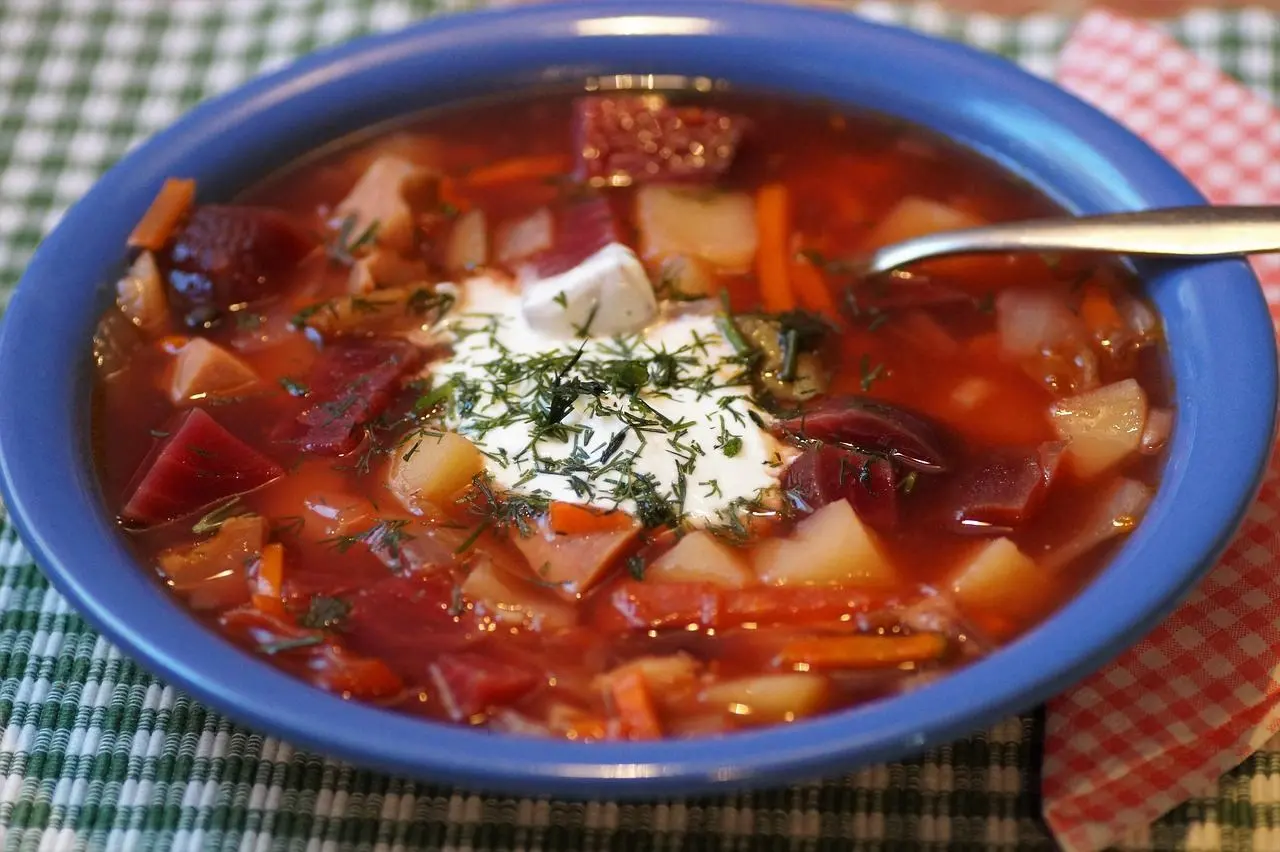
Want a pot of deep-red soup you can trust? This borscht recipe simmers beet, cabbage, tomato and root vegetables in broth, then finishes with sour cream and dill.
If you enjoy this soup, you can find more dishes among our russian recipes.
| Item | Value |
|---|---|
| Typical base | Beet, cabbage, tomato and root vegetables |
| Beet forms used | Beetroot, sugar beet or fermented beet juice |
| Usual accompaniments | Sour cream, dill and bread or garlic rolls |
| Common add-ins | Fish, mushrooms or sweet peppers |
| Ukraine’s national heritage list entry | 2020 |
| UNESCO Committee approval of urgent-safeguarding listing | 1 July 2022 |
These figures come from UNESCO’s news release and NPR’s report. They can change, so check the sources before you rely on them.
Where borscht comes from
Borscht is a hearty beet soup that NPR describes as widely eaten across Eastern Europe and extremely common in Russia. It is also a dish with a contested name tag, so it helps to know the background before you cook it.
Ukraine considers borscht a national dish. As of UNESCO’s 1 July 2022 news release, the Committee approved listing the culture of Ukrainian borscht cooking among heritage in need of urgent safeguarding, and the same release says Ukraine had added it to its national list in 2020.
Russia has long claimed the soup as part of its own food tradition, and its origins possibly trace back to ancient Kievan Rus, according to NPR. The recipe below follows the shared core of the dish that cooks across the region recognize.
What goes into the pot
UNESCO describes the dish as a traditional soup cooked with broth combined with beetroot, sugar beet or fermented beet juice. Most home cooks use fresh beetroot, and the rest of the list is flexible.
- Beets: the color and sweet, earthy backbone of the soup.
- Cabbage, shredded finely so it softens in the broth.
- Root vegetables such as potato and carrot, plus an onion.
- Tomato, as fresh, paste or passata.
- Broth, ideally from beef or pork bones, though a vegetable stock works for a meatless pot.
- Sour cream and fresh dill for serving.
- Bread or garlic rolls on the side.
Quantities depend on the size of your pot. A good rule is to use beets and cabbage in roughly equal weight, with a smaller share of potato and carrot.
How to make borscht step by step
The method is simple, and a large pot is all the equipment you need. UNESCO notes that borscht is cooked in a large pan or pot, which suits a soup made in generous batches.
- Simmer your meat and bones gently in water until the broth is rich and the meat is tender, skimming off any foam. Skip this step and start with stock if you are cooking a vegetarian pot.
- Peel the beets and grate or cut them into thin matchsticks. Soften them in a little oil with the tomato until the mixture turns glossy and dark.
- Add the potatoes to the simmering broth and cook them until just beginning to soften.
- Cook the onion and carrot in a pan until sweet, then stir them into the pot.
- Add the cabbage and the beet mixture, and simmer until every vegetable is tender but still holds its shape.
- Season with salt and pepper, add chopped garlic and dill, and let the pot rest off the heat before serving.
Ladle the soup into warm bowls and add a spoonful of sour cream. Serve it with bread or garlic rolls, which is how UNESCO says the dish is typically served.
Variations and what to serve alongside
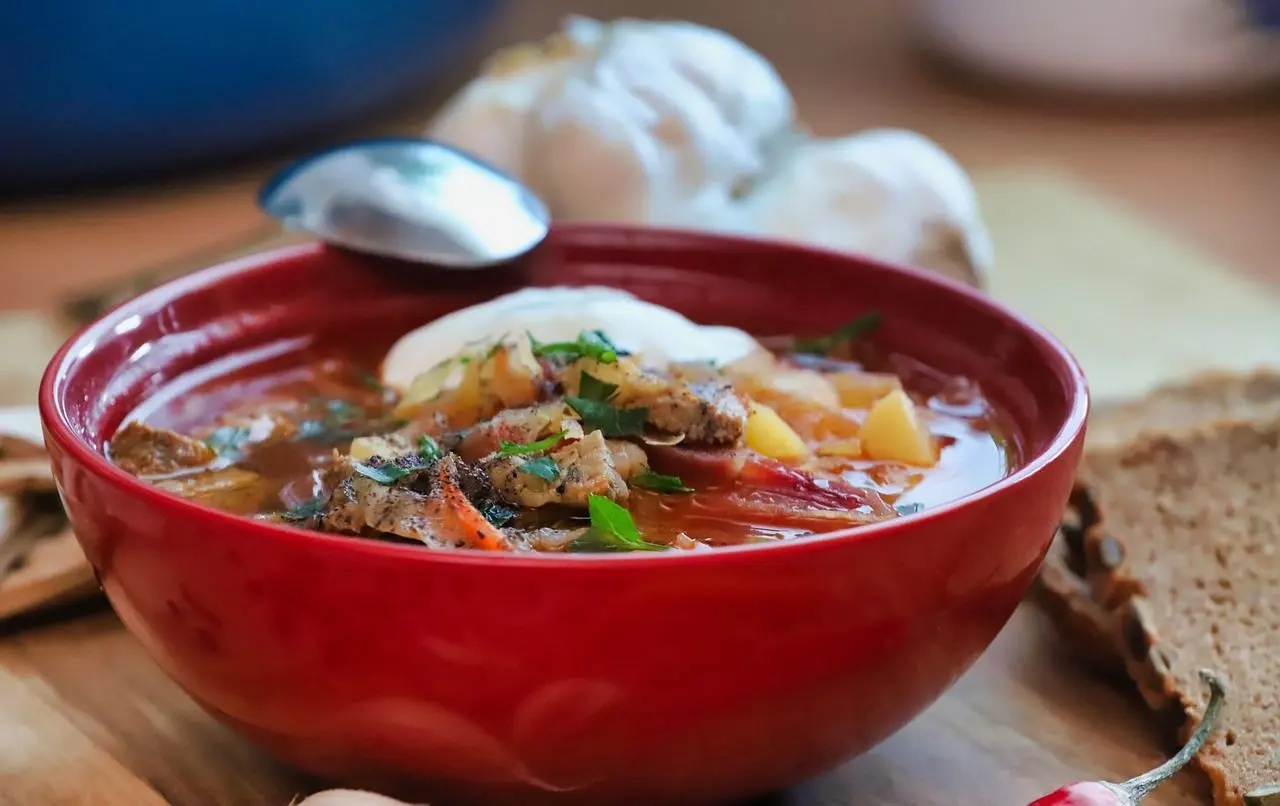
Borscht changes from kitchen to kitchen. UNESCO’s release lists mushrooms, fish or sweet peppers as variations, and NPR adds that meat is the most common addition to the typical base.
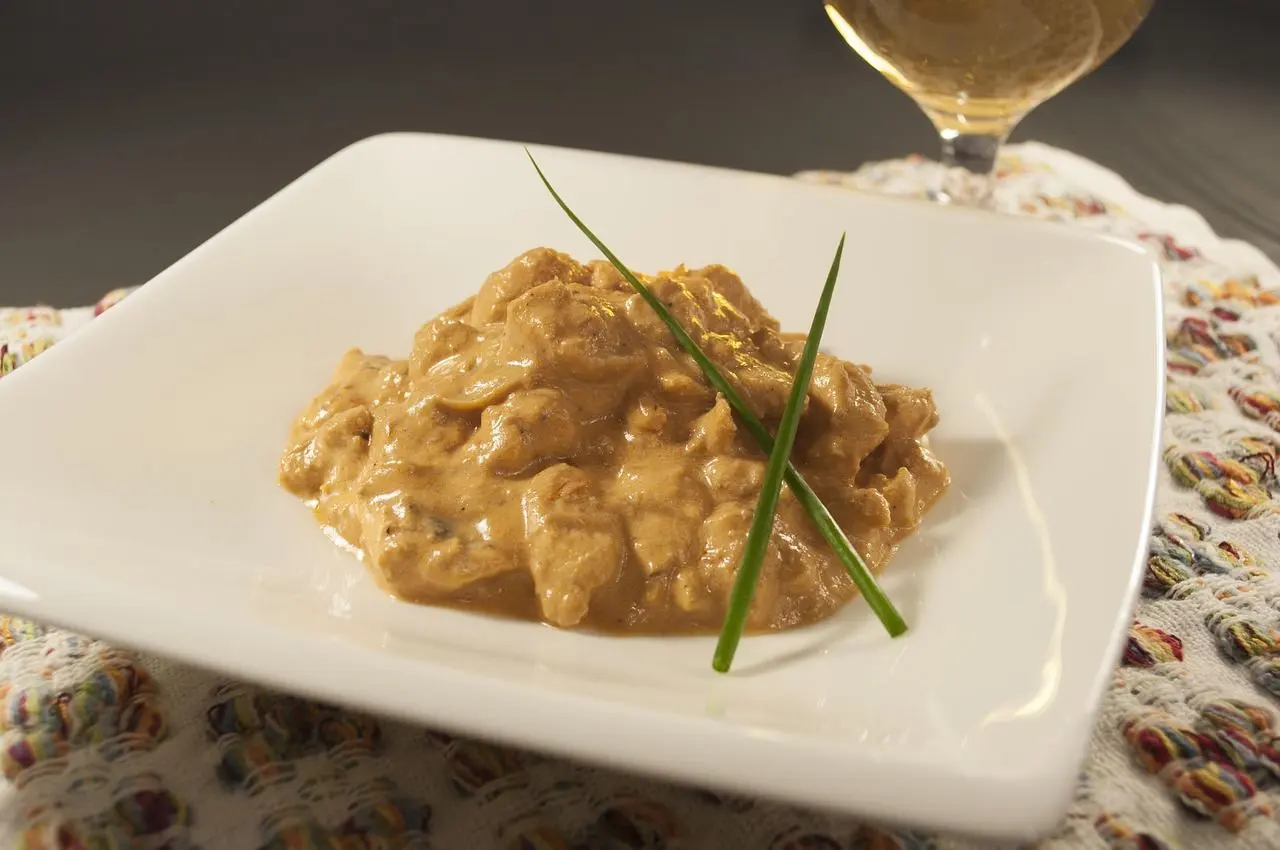
For a hearty dinner, pair the soup with bread and follow it with a main such as this beef stroganoff recipe. If you want something sweet to close the meal, our medovik recipe makes a layered honey cake that suits the same table.
UNESCO also says the dish is prepared primarily by women, although many men cook it too as an everyday meal, and that families pass it on to children who help in the kitchen.
Tips for a clear, vivid soup
- Cook the beets in a pan before adding them, so their color stays bright instead of fading in the broth.
- Keep the broth at a gentle simmer rather than a hard boil for a clearer soup.
- Season near the end, because the broth reduces and the flavor concentrates.
- Let the pot rest before serving, since the soup often tastes better after the flavors settle.
Leftovers keep well in the refrigerator, and the soup can be gently reheated on the stove.
Frequently asked questions
Is borscht Russian or Ukrainian?
Show answer
Both countries cook it, and it is eaten across the region. Ukraine regards it as a national dish, and UNESCO’s listing, per NPR, does not imply exclusivity or ownership of the heritage.
Do I need meat to make borscht?
Show answer
No. A rich vegetable stock gives a good meatless pot, and cooks also add mushrooms or fish for different versions.
What should I serve with borscht?
Show answer
Dill, a spoonful of sour cream and bread or garlic rolls are the classic partners.
Can I make borscht ahead of time?
Show answer
Yes. Cook it fully, cool it, and chill it in the refrigerator; reheat gently and add fresh dill when you serve.