Worried your first pancake will be a dud? This blini recipe keeps it simple: a batter of flour, milk and eggs, a rest, and a hot, even pan. Get those right and thin blini follow.
Thin blini sit within the wider set of russian recipes on this site, and this page covers both everyday cooking and the Maslenitsa table.
| Item | Value |
|---|---|
| Basic batter | Flour, milk and eggs |
| Modern Russian blini | Pan-sized, leavened, thin pancakes |
| Oladyi | Smaller, thicker pancakes, several baked on one larger pan |
| Maslenitsa | A week-long festival before Lent |
| Traditional Maslenitsa serving | Eaten twice a day |
These figures come from Folkways and Wikipedia’s blini entry. Descriptions and traditions can change or differ by region, so check the sources before you rely on them.
What exactly are blini?
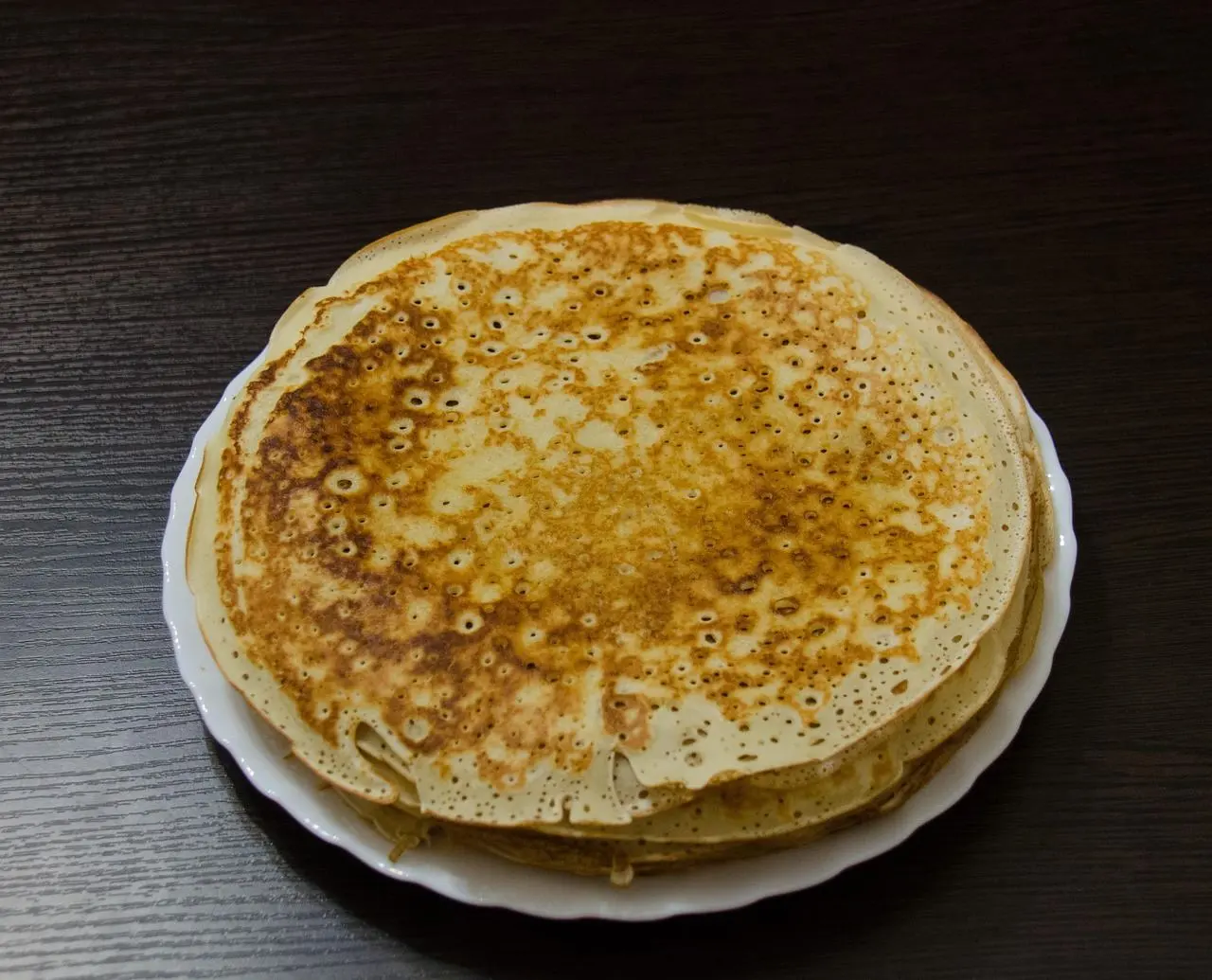
In English, “blini” often means any small pancake, but Russian cooks sort them more carefully. According to Wikipedia, the modern Russian term most often refers to pan-sized leavened thin pancakes, although smaller leavened pancakes are also called blini. Smaller and thicker pancakes, with several baked on one larger pan, are called oladyi.
Traditional blini use a yeasted batter. Wikipedia describes it as left to rise and then diluted with milk, soured milk, and cold or boiling water.
Yeast is not everyone’s preference today. Folkways notes that many cooks now prefer a simpler recipe without aeration, because a porous blin holds fillings less well.
Kefir is another route to a tender batter. The Moscow Times reports that kefir blinis have been made in Russia since about the beginning of the 20th century.
Ingredients and batter
Start from the basic batter. Folkways says the most basic recipe involves just flour, milk, and eggs.
- Flour: wheat for everyday thin blini, or buckwheat if you want a nuttier flavor and browner color.
- Liquid: milk, or buttermilk or kefir for a lighter, tangier batter.
- Eggs: they bind the batter and give it richness.
- Butter: for the pan and for serving hot.
Quantities vary from cook to cook, and the sources behind this page give no single ratio. Aim for a batter that pours thinly and spreads when you tilt the pan, and adjust with a splash more milk or a spoonful more flour.
Give the batter time to rest. The Moscow Times says a buckwheat blini batter benefits from resting, even overnight, and suggests getting your skillets going about 20 minutes before guests are due.
Expect a stumble at the start. The same Moscow Times piece quotes a Russian proverb that the first pancake is always a dud.
How to cook thin blini, step by step
- Whisk the flour, milk and eggs into a smooth, pourable batter, then let it rest.
- Heat a flat pan until it is hot all over, not just in the middle.
- Pour the batter and spread it at once by tilting or swirling the pan.
- Cook until the surface sets and the underside browns, then flip.
- Stack the finished blini on a plate in a warm oven while you cook the rest.
The pan matters most. Folkways explains that blini cook on a flat pan meant to be hot and to be hot evenly, so the batter must be poured and spread quickly if each blin is to cook evenly.
Flipping is simple in a skillet. As the Moscow Times points out, you can make blini in a skillet, but then you need to flip them.
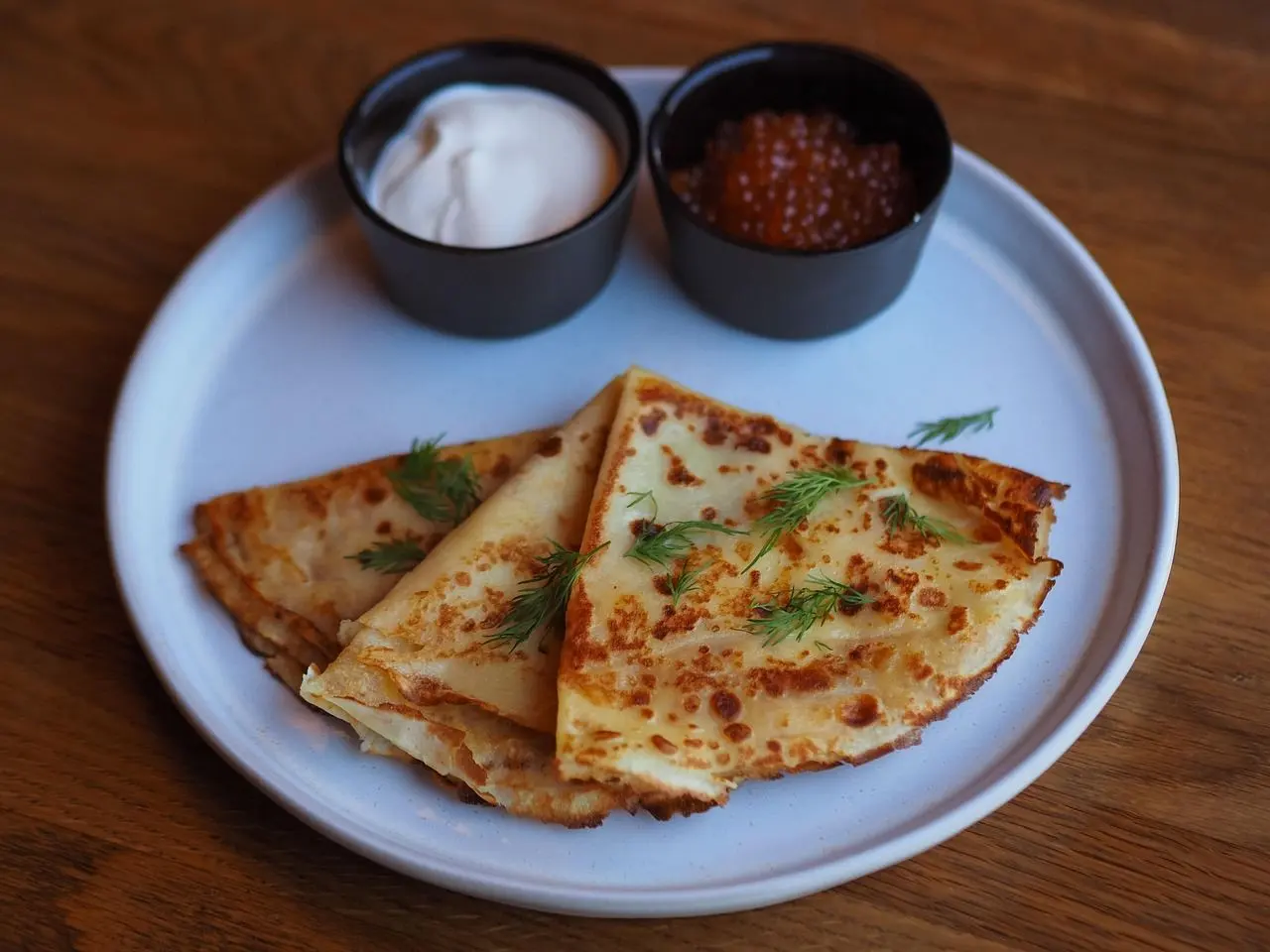
If you cook for a crowd, borrow a pro habit. Folkways says experienced chefs often have two pans running at once, and the Moscow Times describes banking a lovely stack of pancakes in the oven before guests arrive.
Fillings and toppings
Blini are flexible. Folkways lists these among the usual toppings and fillings:
- Sour cream
- Cottage cheese
- Jam or honey
- Caviar
- Minced meat or fish
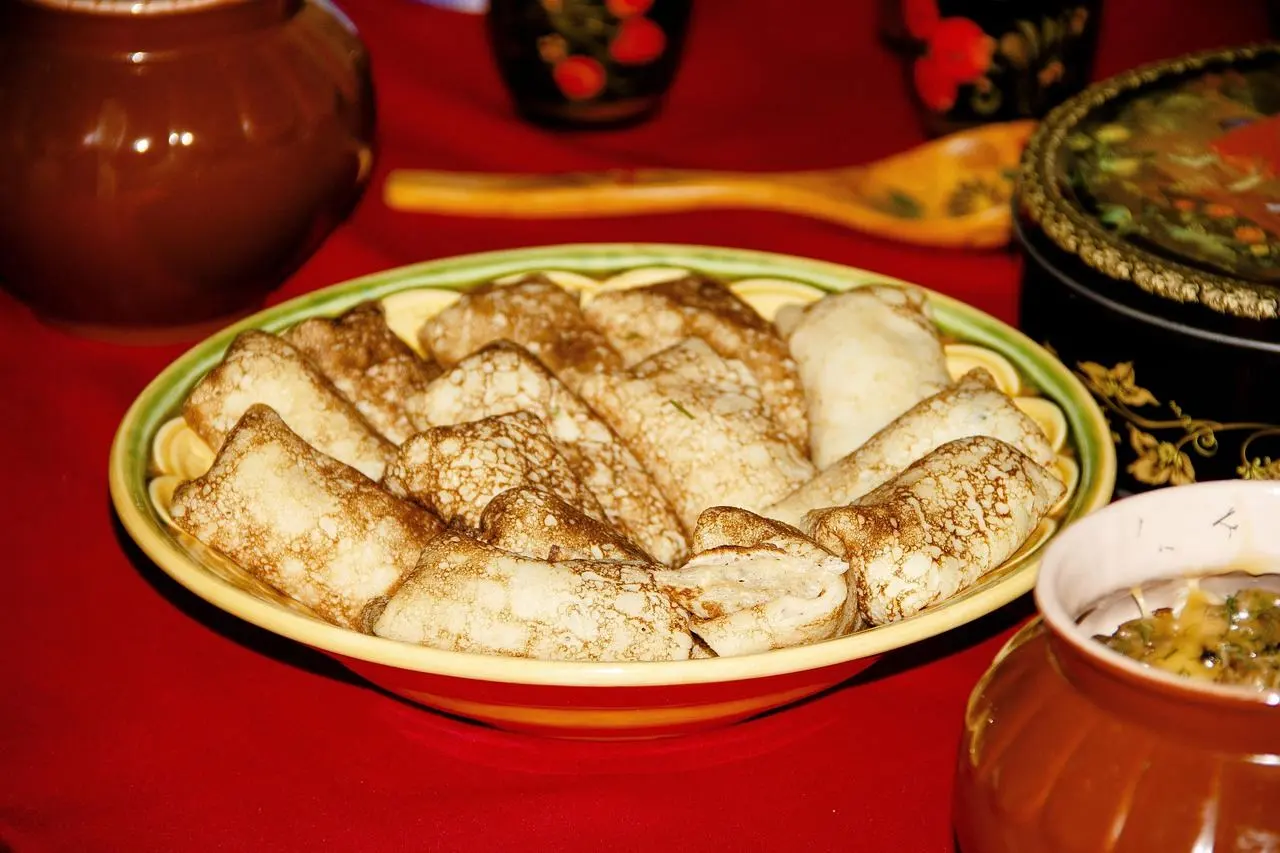
Folkways adds that the fillings and the blini are often served separately, so each person assembles their own.
If cottage cheese is your favorite filling, the syrniki recipe shows another way to cook with it. For a savory dish built around a different kind of dough, try the pelmeni recipe.
Blini and Maslenitsa
Blini are most significant during Maslenitsa, which Folkways describes as a week-long festival celebrated before Lent. Wikipedia adds that blini were traditionally prepared at the end of winter during Maslenitsa (‘butter week’) as a treat eaten twice a day.
The custom is not as ancient as many assume. The Moscow Times notes that there are no written records of blini in Shrovetide festivities until the 16th century.
The week has its own rhythm. According to the Moscow Times, on Wednesday mothers-in-law invite their sons-in-law for blini, and on Sunday, once the butter, cheese, milk and blini are gone, the effigy of Maslenitsa is burned.
Blini also change from place to place. The Moscow Times lists buckwheat blinis in Central Russia, wheat blinis with smelts in St. Petersburg and Veliky Novgorod, and thin “transparent” blinis in Siberia.
Frequently asked questions
Why does the first blin so often fail?
Show answer
Treat it as a test pour. It shows you whether the pan is hot enough and the batter is thin enough before the pancakes that count.
Are blini the same as crepes?
Show answer
They are close relatives. Wikipedia calls blintzes, known as blinchiki (‘little blinis’) in Russian, an offshoot of blini or crêpes.
Do I need yeast for blini?
Show answer
No. Wikipedia says a lighter, thinner form made from unyeasted batter, usually flour, eggs, milk or soured milk, kefir, ryazhenka or varenets, is also common in Russia.
Why are blini eaten at Maslenitsa?
Show answer
Their shape does the symbolic work. Folkways says blini, with their round, golden appearance, are symbolic of the sun, embodying warmth and light.