Craving a syrniki recipe that won’t turn rubbery or leak in the pan? Use medium-moist tvorog, very little flour and gentle heat, and you’ll get golden, tender farmer’s cheese pancakes.
Syrniki are a favorite among the russian recipes on this site, and you can make them with one bowl and a frying pan.
| Item | Value |
|---|---|
| Tvorog per batch | 400 g |
| Fat content of tvorog | 5-9% |
| Flour as binder | 1-1.5 Tbsp |
| Sugar | 2 Tbsp |
| Yield | 10 syrniki |
| Oven finish | 5-7 minutes |
These figures come from the Moscow Times syrniki recipe. Recipes vary and figures can change, so check the source before you rely on them.
What are syrniki, and why are they called cheese pancakes?
Syrniki are fried Eastern Slavic quark pancakes, as Wikipedia describes them. The same page says they are also called tvorozhniki and are made from creamy tvorog mixed with flour, eggs and sugar.
The name comes from the Slavic root syr, meaning a soft curd cheese, according to Wikipedia. That is why the name says cheese while the pan holds tvorog.
The dish is older than its modern form. The Moscow Times reports that syrniki begin to be mentioned only in the 16th century, and that the old syrnik is nothing like its modern descendent. A fried recipe close to today’s version appears only in the second half of the 19th century.
Choosing tvorog, or a good substitute
Good tvorog shapes the result more than any technique. The Moscow Times authors say the curd must not be dry, yet if it is too moist the syrniki can leak as they cook. They call a fat content of 5-9% fine and say to skip any pack whose ingredient list shows vegetable fats.
Folkways prefers fresh tvorog with 9% milkfat but says anywhere from 7-18% will do. It adds that tvorog made without rennet is softer and lighter, and makes better syrniki.
If you cannot find tvorog, the sources name these stand-ins:
- Quark, farmer’s cheese or pot cheese, which Wikipedia suggests as substitutes.
- Well-drained cottage cheese, which the author of the SBS Food recipe has used, though tvorog is sold in Russian and Eastern European stores.
- Ricotta, only in an extreme pinch, according to Folkways, which advises leaving out sugar in that case.
Ingredients and batter
This list follows the Moscow Times recipe, which makes 10 syrniki from 400 g of tvorog with 1-1.5 Tbsp flour and 2 Tbsp sugar. The rest of the list is short:
- Tvorog, medium moist
- Flour, plus a little extra for rolling
- Sugar, kept modest
- A pinch of salt
- One whole egg and one egg yolk
- Clarified butter for frying
Knead the tvorog in a bowl with a fork or pestle to make it more elastic. Then add the whole egg to bind it and the yolk for a better crust, as the Moscow Times recipe suggests. Keep the sugar low so the syrniki can carry a sweet topping.
Keep butter out of the batter. The same Moscow Times authors warn that it makes the syrniki split or leak in the frying pan.
Stir by hand with a fork or wooden spoon, then rest the batter. Folkways suggests about ten to thirty minutes, though you can use it right away if you are impatient. Skip the eggs and your syrniki will fall apart.
Add dried fruit last. Folkways says to rehydrate raisins in warm water for 20 minutes, never boiling water, which would leave the finished dish mushy.
The SBS Food recipe takes a looser route. It puts the cheese, eggs, oil, sugar, flour, baking powder and vanilla in a bowl and beats them with an electric mixer. The author says the very sticky batter is exactly what it is supposed to be.
Shaping and frying step by step
The method below draws on the Moscow Times and Folkways:
- Shape the batter into thick rounds or ovals and roll each one in flour.
- Put clarified butter in a cold pan, then heat the pan to medium high.
- Add the syrniki and lower the heat so they don’t burn.
- Brown one side, turn them, and brown the other side without rushing.
- Move them to a baking tray and finish them in a medium oven.
- Let them cool a little before topping, so the sour cream doesn’t run.
Start with 1-2 Tbsp clarified butter in the cold pan, per the Moscow Times. Folkways keeps the discs about a half inch thick and no bigger than your palm. Russia Beyond instead rolls the mixture into a thick log and cuts it into 10 equal-size cakes.
Browning alone does not mean done, say the Moscow Times authors, who finish the syrniki in a medium oven for about 5-7 minutes. The hotter, oil-based SBS Food version cooks them for 1-2 minutes, then turns them for a further 1-2 minutes. Whichever you pick, the Moscow Times authors say never to cook syrniki in a microwave.
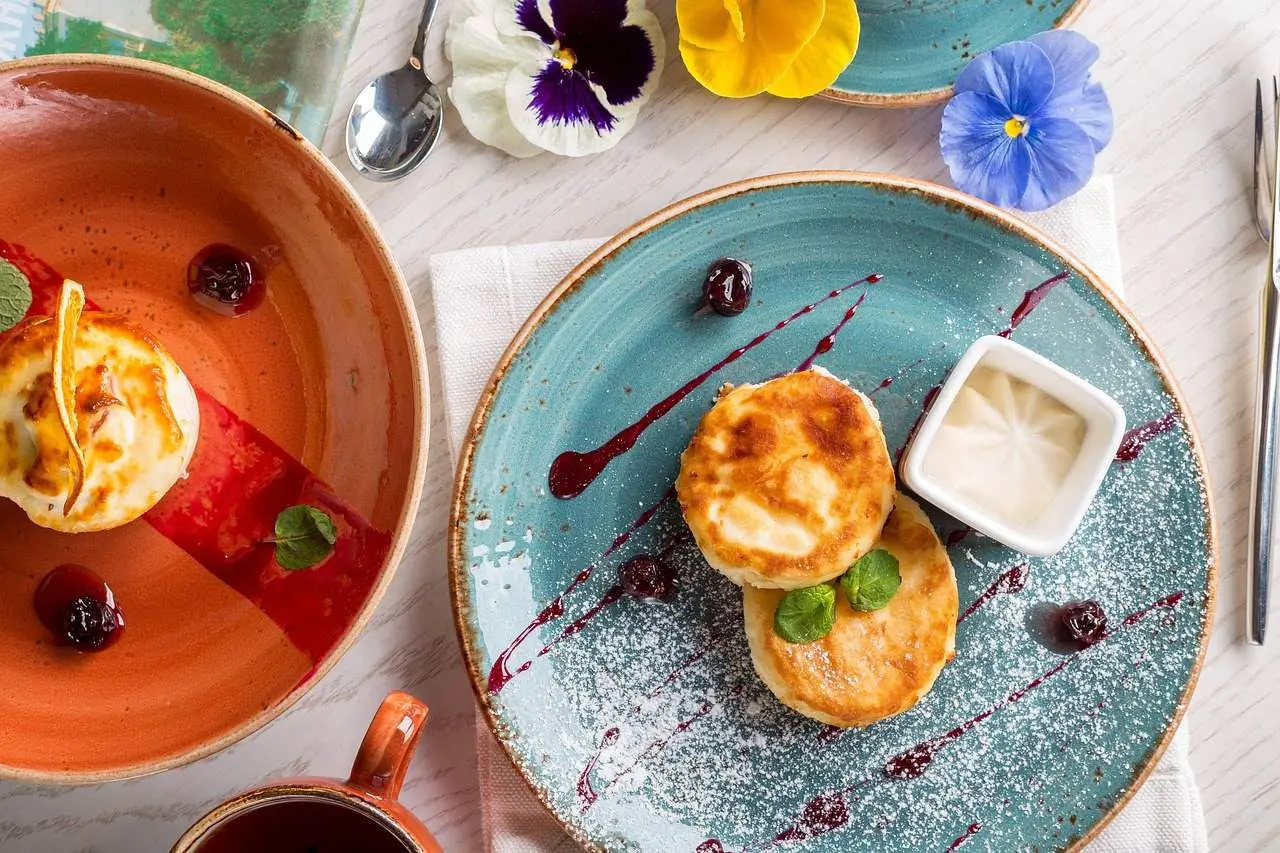
Toppings and variations
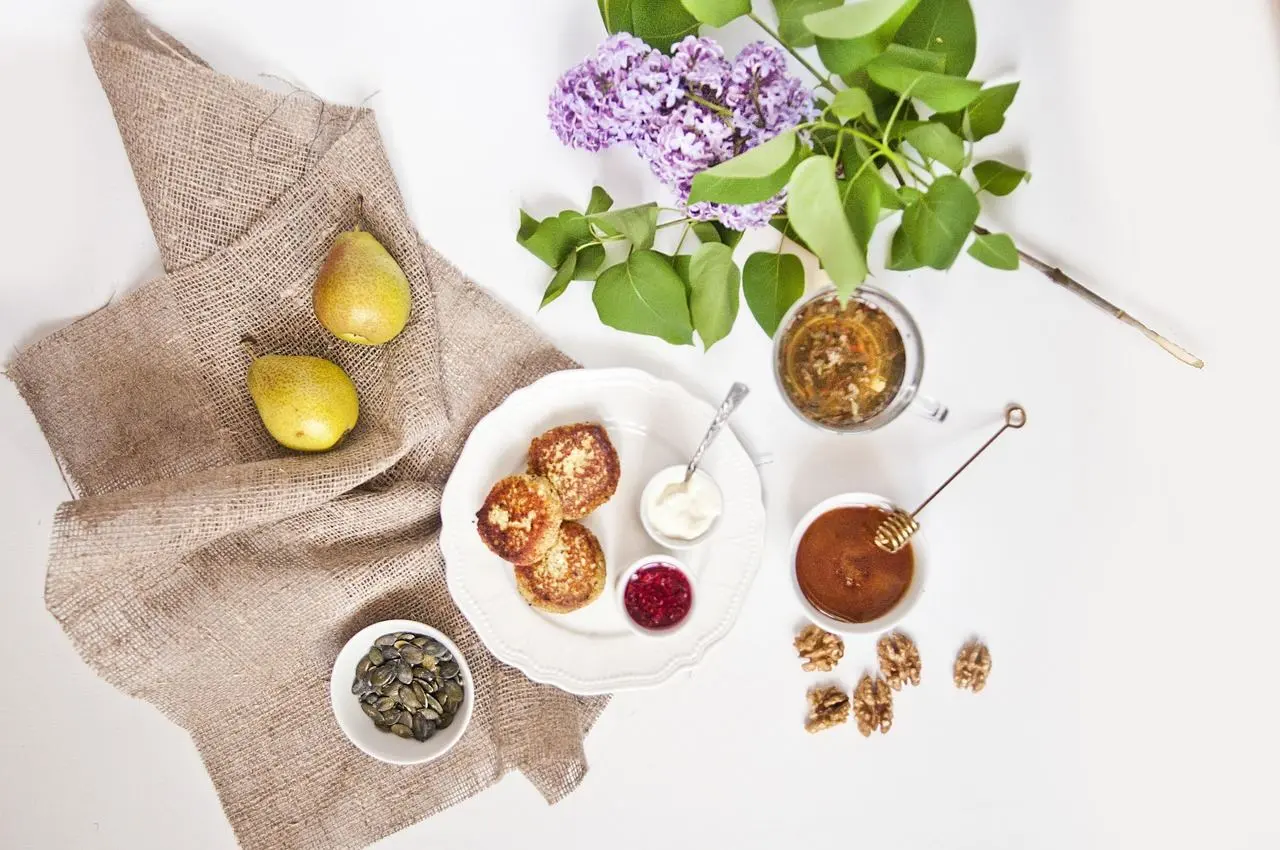
Sour cream is the classic garnish, according to the Moscow Times. Wikipedia lists varenye, jam, smetana or melted butter as the usual toppings.
Plenty of variations appear in the sources:
- Raisins, chopped dried apricot, fresh apples or pears in the batter, per Wikipedia.
- Buckwheat flour for a nutty note, with buttermilk or kefir for tang, per the Moscow Times tvorog test kitchen.
- Chives, dill or garlic for a less common savory version, per Folkways.
- Almond flour in place of flour or semolina for a gluten-free batch, per the Moscow Times.
Flour changes the texture a lot. The Moscow Times tvorog test kitchen says classic versions with an even ratio of tvorog to flour come out dense, like fried cheesecake.
Folkways says syrniki, like blini, are generally associated with grandmothers and traditional cooking, so the blini recipe makes a natural next project. For a savory dish on the same table, the olivier salad recipe is worth a look.
Frequently asked questions
Why did my syrniki turn out rubbery?
Show answer
The wrong tvorog is the usual suspect: the author at Russia Beyond blamed her choice of tvorog for a rubbery batch. Folkways adds that very dry tvorog needs sour cream, yogurt or milk stirred in.
Is tvorog the same as cottage cheese?
Show answer
Not quite. The Moscow Times tvorog test kitchen explains that classic cottage cheese uses rennet while tvorog uses acids such as lemon juice, vinegar or buttermilk, which makes quark and farmers’ cheese the better analogs.
Should I fry syrniki in butter or oil?
Show answer
The sources disagree. The Moscow Times authors say syrniki fried in vegetable oil don’t taste good, while Wikipedia notes the cakes are shallow-fried in vegetable oil or in hot butter.
Are syrniki breakfast or dessert?
Show answer
Either one works. Wikipedia calls them traditionally sweet and served for breakfast or dessert, though they can be made savory too.