
Want a shchi recipe that tastes like a real Russian kitchen? Simmer sauerkraut or fresh cabbage with beef and ham, add vegetables, and rest the pot overnight. Serve it with sour cream and rye bread.
Shchi belongs with the other russian recipes on this site, from hearty soups to festive salads.
| Item | Value |
|---|---|
| Cabbage soups known in Kievan Rus since | 9th century |
| Shchi a staple food of Russia by | 10th century |
| Meat simmering time in the recipe below | 2 to 2.5 hours |
| Yield of the recipe below | 8 servings |
| Sauerkraut in the recipe below | 400 g |
These figures come from Wikipedia’s shchi entry and Russia Beyond’s shchi recipe. They can change, so check the source before you rely on them.
What shchi is and where it comes from
Shchi is the most popular Russian cabbage soup, according to Russia Beyond. The most famous traditional version is made of sauerkraut, while late spring brings sorrel or nettle and summer brings fresh cabbage.
Cabbage soups have been known in Kievan Rus since the 9th century, soon after cabbage arrived from Byzantium. By the 10th century shchi was a staple food of Russia, and a saying followed: “Shchi da kasha – pishcha nasha”, or “Shchi and kasha are our food” (Wikipedia).
It was never only a peasant dish. A Dutch traveler, Cornelis de Bruijn, wrote after visiting Moscow in 1702 that commoners eat it twice a day, and Russia Beyond adds that even Peter the Great preferred simple Russian shchi for lunch.
In the Soviet years borscht pushed shchi aside. The Moscow Times notes that the 1955 cookbook “Kulinaria” has 14 recipes for borscht and just nine for shchi.
Ingredients for a rich sauerkraut shchi
This rich shchi follows Yulia Mulino’s recipe for Russia Beyond. She describes it as a meat broth with sauerkraut, the version most often made in Russia, and it makes 8 servings from 5 liters of water (Russia Beyond).
| Ingredient | Amount |
|---|---|
| Beef on the bone | 300 g |
| Ham | 300 g |
| Sauerkraut | 400 g |
| Potatoes | 2 pcs |
| Carrots | 2 units |
| Onions | 2 pcs |
| Garlic | 3 cloves |
| Flour | 2 tbsps |
| Bay leaf | 4 pcs |
The amounts come from Russia Beyond’s shchi recipe; scale them to the size of your pot.
Butter, vegetable oil, salt, black pepper, dill seeds and fresh parsley round out the pot, and fat sour cream goes on top. Celery root and parsnip root are optional extras.
The classic recipe has no tomato paste, but home cooks have added a little for color in recent years, as Mulino does (Russia Beyond).
Step-by-step method
Work in stages, because the broth, the cabbage, the fried vegetables and the flour dressing only meet near the end.
- Put the pieces of beef and ham in water and bring to a boil.
- Skim off the foam, add whole carrots and onions, and cook the meat on low heat.
- Stew the sauerkraut in butter until soft, adding some meat broth as it cooks.
- Slice the carrots, parsnip and celery, cut an onion into half rings, and fry them in vegetable oil with a teaspoon of tomato paste.
- Lift the meat out of the broth together with the onions and carrots.
- For the flour dressing, toast the flour in a dry pan while stirring, then stir in cooled broth until smooth.
- Add the potatoes to the broth and boil.
- Return the braised cabbage, fried vegetables and meat to the pot and cook a little longer.
- Stir in the flour dressing and leave the soup covered overnight.
- The next day, reheat it, squeeze in the garlic and add one more bay leaf.
- Ladle it into bowls with sour cream and fresh herbs.
On timing, the meat cooks on low heat for 2 to 2.5 hours, and spices and salt go in after about 2 hours of boiling. The potatoes boil for 10 minutes, then the combined pot cooks for another 10 minutes (Russia Beyond).
Squeeze the sauerkraut and chop it roughly before it goes in the pan, as Coquinaria advises in its adapted historical recipe. If the cabbage still turns out too sour or salty, Wikipedia notes that a portion of cooked pasta can be added to the batch.
Old Russian cooks simmered the soup for hours in a stove rather than boiling it. Ovens, slow cookers and a regular stovetop can all give a similar result, says Russia Beyond.
Fresh, sour and green: how shchi varies
There is no single canonical shchi, and the seasons and the fasting calendar shaped many versions.
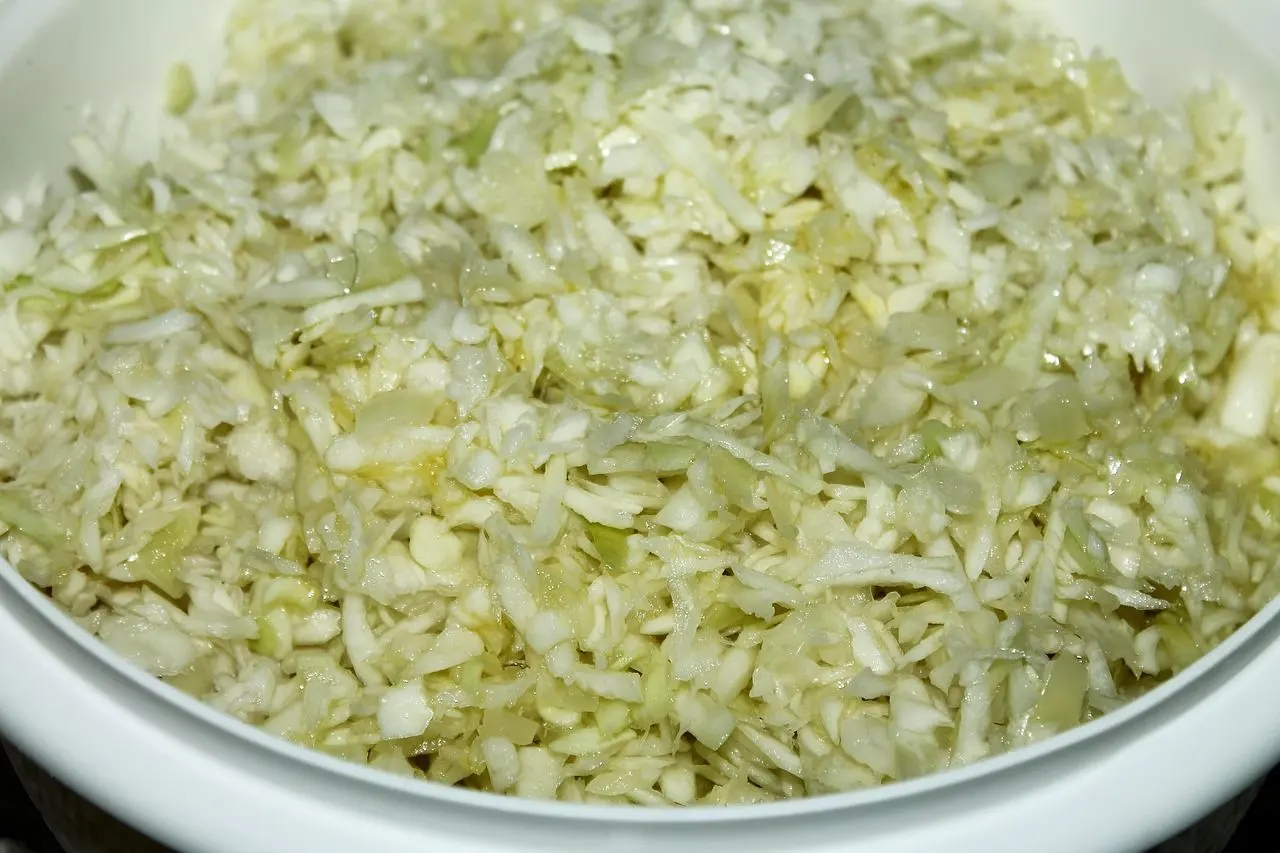
- Fresh-cabbage shchi was cooked from the end of summer, and sauerkraut took over from late fall (The Moscow Times).
- Green shchi swaps the cabbage for dock, spinach or nettle (Wikipedia).
- Meatless versions add mushrooms, turnips, rye flour or buckwheat for more filling and flavor (Russia Beyond).
- Fish sometimes replaced meat because of the Eastern Orthodox fasting calendar (Wikipedia).
- Beef was the favorite meat in Russia, while pork was more common in Ukraine (Wikipedia).
The Moscow Times shares a richer version built on 500 g of fresh cabbage, with a broth simmered for about an hour and a half (The Moscow Times).
The recipe kept changing. Black pepper and bay leaf joined the spice mix around the 15th century, and flour was dropped by many cooks for finer taste (Wikipedia). Potatoes entered the pot once they reached Russia in the early 18th century, yet Mulino still holds that real shchi must be very thick (Russia Beyond).
Serving shchi and what goes with it
Shchi is traditionally eaten with rye bread (Wikipedia). Mulino also wants fresh herbs and heavy sour cream on the table, and calls a day’s rest before serving the soup’s main secret (Russia Beyond).
An English translation of a Russian housewives’ cookbook suggests sour cream, fried or boiled sausages, thick buckwheat kasha or mushroom pirozhki alongside sauerkraut shchi (Coquinaria).
If you are building a bigger Russian table, the olivier salad recipe gives you a cold dish to set beside the hot soup. Another bowl worth cooking next is the solyanka soup recipe.
Frequently asked questions
Can I make shchi with fresh cabbage instead of sauerkraut?
Show answer
Yes. Russia Beyond reports versions made with dried, frozen or fresh cabbage as well as sauerkraut, so any of them counts. For a sour note without sauerkraut, kvass, salted mushrooms or sour apples can do the job.
Is shchi the same as borscht?
Show answer
Not quite, though the two are related. A mid-19th-century Russian dictionary defines borshch as a kind of shchi with beet sour added for tartness (Wikipedia).
What does “sour shchi” mean?
Show answer
In cooking, it names the sauerkraut version of the soup. Historically the same words also described a kvass-like drink that had nothing to do with the soup (Wikipedia).
Can you freeze shchi?
Show answer
Wikipedia lists freezing as one reason for its popularity: the soup could be frozen in winter and carried as a solid on a trip, then cut up when needed (Wikipedia).